2790 Wildlife
Building a wildlife-aware community
Project Details
Project
2790 Wildlife
Purpose
Emergency response, wildlife awareness and community/visitor education
Location
2790 Region of the Greater Blue Mountains
Status
Ongoing/in development
Created By
Teangi Chambers with the assistance of volunteer wildlife rescuers and carers, supported by community partners
Medium
Community engagement and digital resources
Themes
Wildlife emergency response, wildlife conservation, community awareness, visitor/tourist awareness
Project Introduction
2790 Wildlife is a community initiative supporting coexistence between people and wildlife across the 2790 region. The project brings together education, practical resources, emergency response information and community engagement to help people better understand and care for the wildlife they share their environment with.
Through digital resources, community outreach and collaboration with local partners, 2790 Wildlife aims to encourage informed actions, strengthen community connection and support a more wildlife-aware future.
Concept
2790 Wildlife was developed to support coexistence between people and wildlife across the 2790 region. Inspired and informed by the experience of local wildlife carers and rescuers, the project focuses on practical education, community awareness and accessible resources that help residents and visitors better understand how to respond to wildlife encounters and live alongside local species.
Future Direction (2026 and beyond)
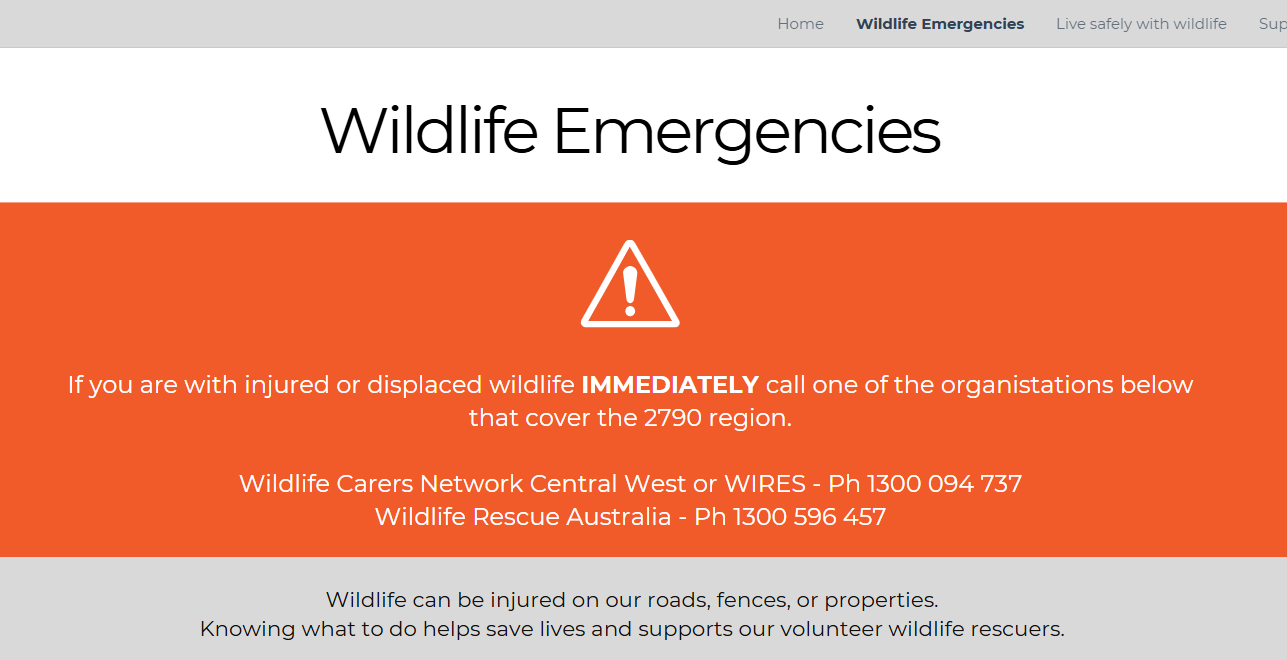
Future resources will support both local communities and visitors to the region, including residents, tourists and short-term accommodation guests. Planned initiatives include community distribution materials, wildlife awareness resources and clear guidance on what to do when encountering injured or displaced wildlife.
Development
Although the website has been developed the community engagement portion of 2790 Wildlife is currently in development. 2790 Wildlife is being progressed through community collaboration with community partners and regional stakeholders. The next stage will focus on expanding community access through targeted resources, including local information materials, outreach initiatives and practical guidance for responding to wildlife encounters and emergencies.